What the report covers
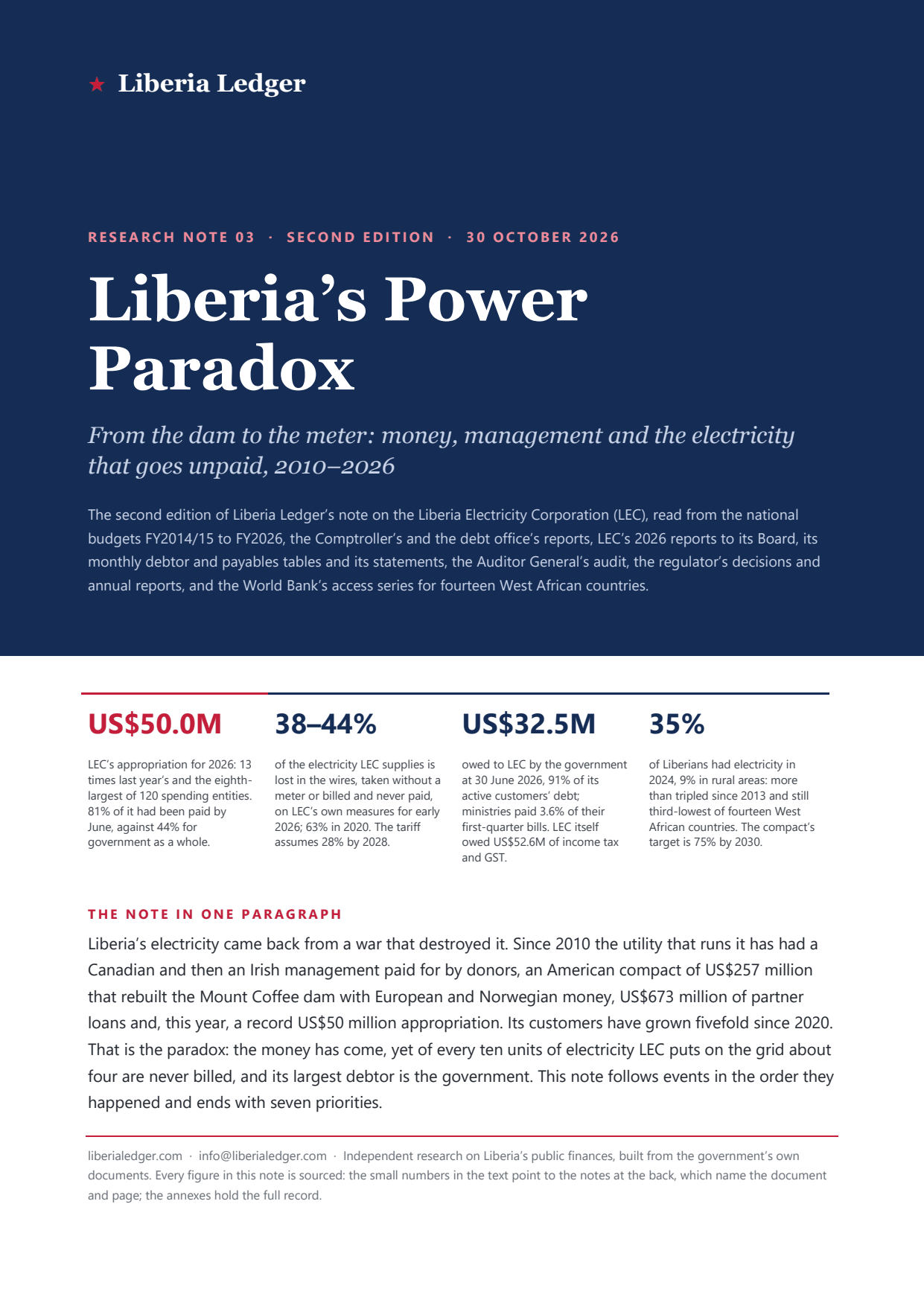
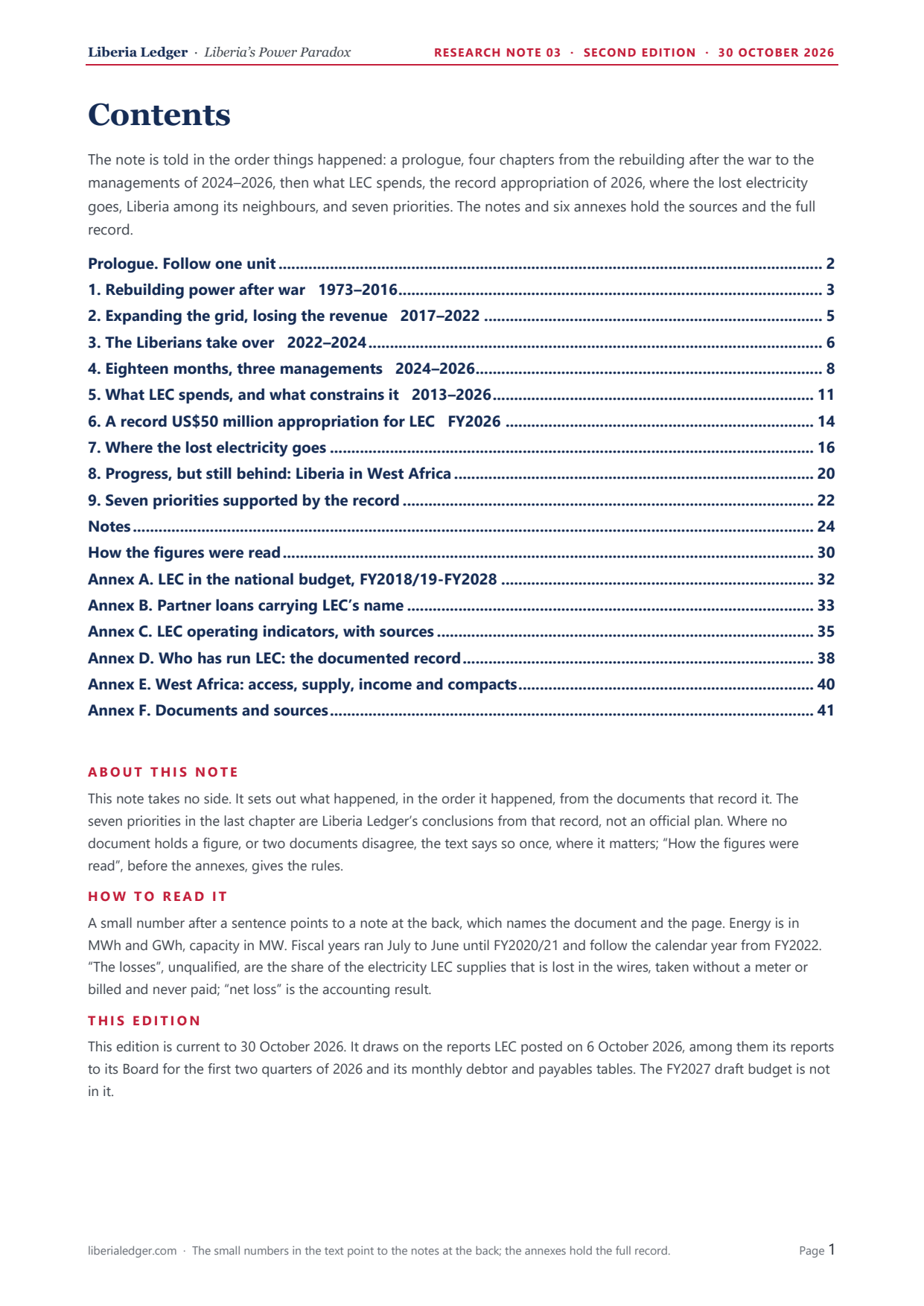
Since 2010 the Liberia Electricity Corporation has had a Canadian and then an Irish management paid for by donors, an American compact of US$257 million that rebuilt the Mount Coffee dam with European and Norwegian money, US$673 million of partner loans and, in 2026, a record US$50 million appropriation: 13 times the year before, the eighth-largest of 120 spending entities, and 81% of it paid by June, against 44% for government as a whole. Its customers have grown fivefold since 2020. Yet of every ten units of electricity LEC puts on the grid about four are never billed, and its largest debtor is the government, which owed it US$32.5 million at 30 June 2026, while LEC itself owed US$52.6 million of income tax and GST. The note tells the story in the order it happened, from the rebuilding after the war to the three managements of 2024–2026, from the national budgets FY2014/15 to FY2026, the Comptroller's and the debt office's reports, LEC's 2026 reports to its Board and its monthly debtor and payables tables, the Auditor General's audit, and the regulator's decisions and annual reports. It sets out what LEC spends and what constrains it, where the lost electricity goes, how Liberia compares with thirteen West African neighbours, and seven priorities the record supports, each with what would show progress. Every figure is sourced to a document and page, in 87 notes and six annexes. The full report is available on request: write to info@liberialedger.com.